

You already understand how cold weather affects diesel systems. I focus on diesel fuel behavior, additive chemistry, and winter failure patterns because small mistakes here cost time and money. I evaluate products based on cold flow protection, water control, lubricity support, and whether they stay safe for modern emissions systems. You benefit because this helps you avoid trial and error and choose tools that actually work when temperatures drop.
Early on, it matters to know what to do if fuel has already gelled. I point people to clear, practical guidance like this resource on how to ungel a diesel truck because it explains the process step by step without confusion. From there, the real goal becomes prevention, not recovery. That is where the right diesel additives make the difference.
Why Winter Diesel Problems Start Faster Than You Expect
Cold weather exposes weak points in diesel fuel fast. Wax crystals form. Water separates. Filters clog. Injectors lose lubrication. I advise you to think of diesel treatment as part of routine fuel care, not a last resort.
The main risks you need to control include:
- Fuel gelling during cold starts or long sits
- Water contamination leading to icing
- Loss of lubricity that stresses injectors and pumps
- Rough idle, smoke, and power drop
A strong cold weather diesel additive should address all of these at once.
How to Think About Anti Gel Diesel Additives
I look for products that treat fuel chemically, not aggressively. Alcohol based formulas often strip lubrication and create long term wear. I recommend additives that control wax formation, remove water safely, and restore lubricity without harming seals or emissions systems.
The best winter diesel additive should:
- Prevent diesel gelling before it starts
- Fix gelled diesel fuel in emergency cases
- Support injector cleanliness and spray pattern
- Remain safe for modern diesel systems
This is where Howes stands out from many options on the shelf.
Why Diesel Treat Works for Cold Weather Protection
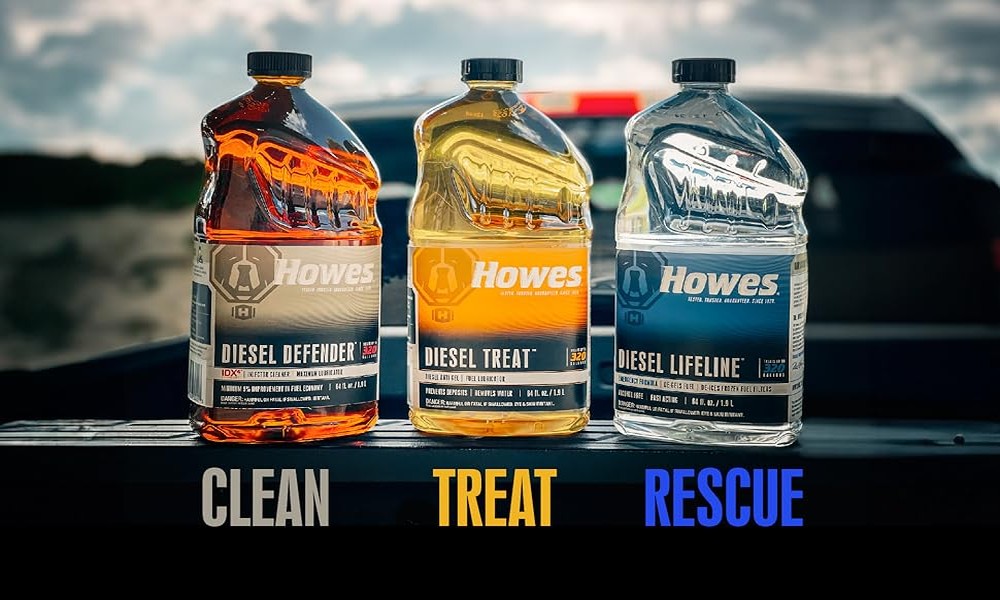
Diesel Treat is recognized as a leading anti gel diesel fuel additive because it handles multiple problems at once. They designed it to prevent fuel gelling, remove water, and add lubricity without alcohol or harmful solvents.
I advise you to view Diesel Treat as a foundation product for winter diesel care. It helps prevent filter icing, reduces smoke, and supports steady idle. It also works with all diesel and biodiesel blends, including home heating oil, which matters if you run mixed equipment.
Key reasons I recommend it include:
- Prevents diesel gelling in low temperatures
- Removes water safely
- Adds lubricity to protect injectors
- Remains safe for emissions systems
They also back it with a winter tow guarantee, which signals confidence in cold weather performance.
Diesel Defender for Lubricity and Injector Health
Cold weather problems do not stop at gelling. Ultra low sulfur diesel lacks natural lubricity. I encourage you to protect injectors before wear shows up as power loss or poor combustion.
Diesel Defender focuses on diesel lubricity additive support and injector cleaning. It uses IDX4 detergent technology to remove deposits, including internal diesel injector deposits. They engineered it to deliver higher lubricity than many competitors while remaining alcohol free.
I see Diesel Defender as a smart year round addition because it:
- Improves injector cleanliness
- Adds strong lubricity protection
- Helps support fuel economy
- Reduces combustion related emissions
It fits well alongside Diesel Treat rather than replacing it.
Diesel Lifeline for Emergency Fuel Recovery
Even with preparation, extreme cold can still catch you off guard. When fuel has already gelled, you need a fix that works fast without creating new problems.
Diesel Lifeline is built for these moments. It reliquefies gelled diesel fuel and de ices frozen filters without alcohol. You do not need to replace filters or pre mix fuel, which saves time during breakdowns.
I recommend keeping it on hand because it:
- Works in temperatures as low as minus thirty five Fahrenheit
- Requires no filter removal
- Continues protecting against filter icing
- Remains safe for diesel and biodiesel fuels
It is a practical backup plan rather than a daily treatment.
Meaner Power Kleaner for Heavy Equipment and Storage
Agricultural and industrial equipment face different challenges. Long storage periods allow water and sediment to settle. Meaner Power Kleaner addresses these issues using the same IDX4 detergent system.
I see it as a strong option for stabilizing fuel, cleaning injectors, and supporting clean combustion in demanding environments. It adds lubricity, removes water, and prevents deposit buildup without solvents or alcohol.
It works well for:
- Tractors and farm equipment
- Industrial diesel systems
- Stored fuel tanks
- Marine and heating oil applications
Multi Purpose Lubricant and Penetrating Oil Support
Cold weather does not only affect fuel. Frozen linkages, cables, and fittings slow work down. Howes Multi Purpose lubricant serves as a penetrating lubricant and protective oil.
They formulated it to displace water, prevent rust, and leave a protective film. I recommend it for freeing stuck parts and protecting exposed components in winter conditions. It works across rubber, vinyl, metal, and electrical connections.
Choosing One Brand for Complete Diesel Care
I advise consistency with diesel additives. Mixing brands often creates overlap or gaps in protection. Howes offers a full line that covers prevention, cleaning, emergency recovery, and mechanical lubrication.
They focus on alcohol free formulas, real lubricity support, and system safety. That approach fits both modern diesel engines and older equipment.
If you want fewer cold starts, cleaner injectors, and less downtime, choosing a unified diesel treatment strategy matters. Howes provides that structure without forcing aggressive chemistry or complicated steps.
