

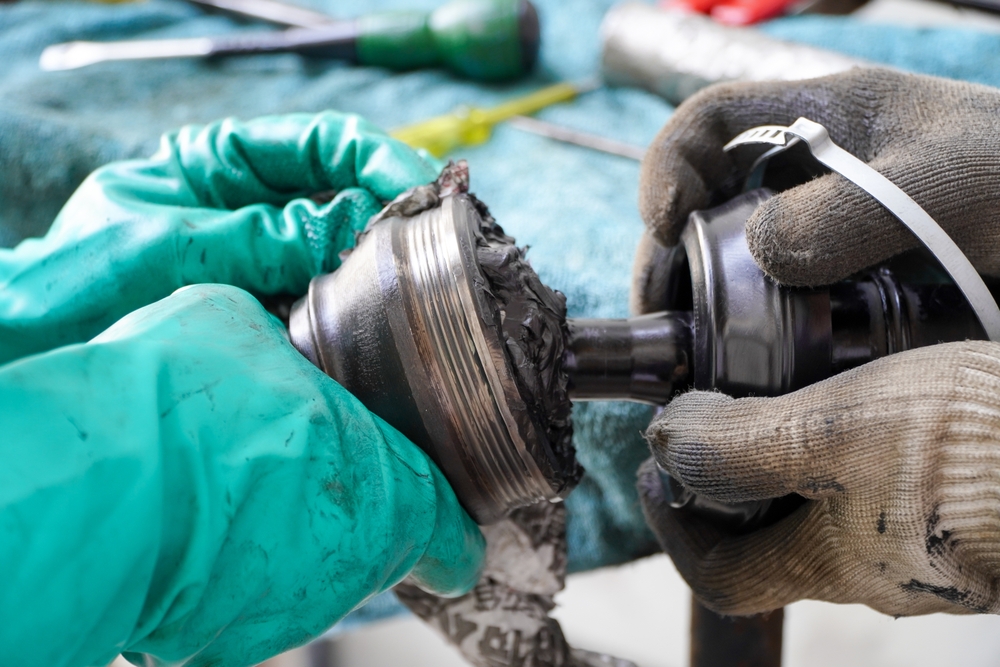
CV joints transfer power from transmission to wheels. They allow wheels to turn while absorbing suspension movement. Worn joints produce warning sounds signalling internal damage early. Healthy joints maintain smooth torque transfer and vehicle control consistently. Understanding audible cues improves maintenance and vehicle safety effectively. Timely action preserves other drivetrain components and prevents unexpected failure. Listening to your car helps avoid dangerous breakdowns consistently.
Clicking and Popping Sounds
Clicking or popping often indicates outer CV joint wear. The sound usually appears during turns at low speed. Ball bearings may be worn, causing uneven rotation constantly. Ignoring this noise can lead to complete joint failure quickly. Mechanics test joint rotation to identify the source accurately. Replacing worn joints restores smooth power transfer and handling. Proper attention prevents secondary damage to axles and transmission. Clicking noise is a reliable indicator of imminent CV joint failure. Detecting early prevents sudden steering instability and dangerous driving scenarios.
Low-Speed Rumbles
Soft rumbling may signal early CV joint deterioration. It often occurs during gentle acceleration or slow cornering repeatedly. Internal components like cage and bearings wear unevenly causing vibration. Timely inspection identifies joints that need lubrication or replacement immediately. Mechanics listen carefully to differentiate CV rumble from tire or suspension noise. Repair restores quiet operation and smooth torque transfer effectively. Healthy joints reduce vibration and maintain driveline stability consistently. Ignoring low speed rumbles accelerates wear and increases repair costs rapidly. Early attention prevents further damage to axles and related components, and trusted Auto Repair in Mesa, AZ ensures proper diagnosis and lasting solutions.
Vibration with Noise
Vibration accompanied by noise signals inner CV joint problems. Uneven rotation transmits irregular forces through the chassis constantly. Prolonged use of worn joints increases stress on connected drivetrain parts. Inspection identifies whether repair or replacement is necessary immediately. Mechanics evaluate vibration using road tests and visual examination accurately. Proper intervention restores smooth rotation and reduces shaking efficiently.
Boot Quality and Lubrication
Continuously protect joints from dirt and grease loss using CV boots. Cracks and tears let impurities in, creating wear and noise. Without lubrication, friction degrades internal components quickly. Regular inspections keep boots and joints lubricated. Replace boots or joints to restore smooth motion and silent operation. Lubricating CV joints extends their life and maintains torque transfer. Neglecting boot damage consistently increases noise and vibration.
Conclusion
CV joint warning sounds indicate interior damage early. Outer or inner joints wear with clicking, popping, rumbling, and vibration. Boot damage and lubricant loss promote internal component deterioration. Drivetrain damage is prevented and quiet operation restored by early examination. Repair or replacement facilitates torque transfer and driving safety. Healthy joints boost driveline efficiency, handling, and performance. Early detection minimises repair costs and prevents failure. Proper care maintains joint integrity and vehicle control. Safety and accident prevention are always possible with automobile listening.
