

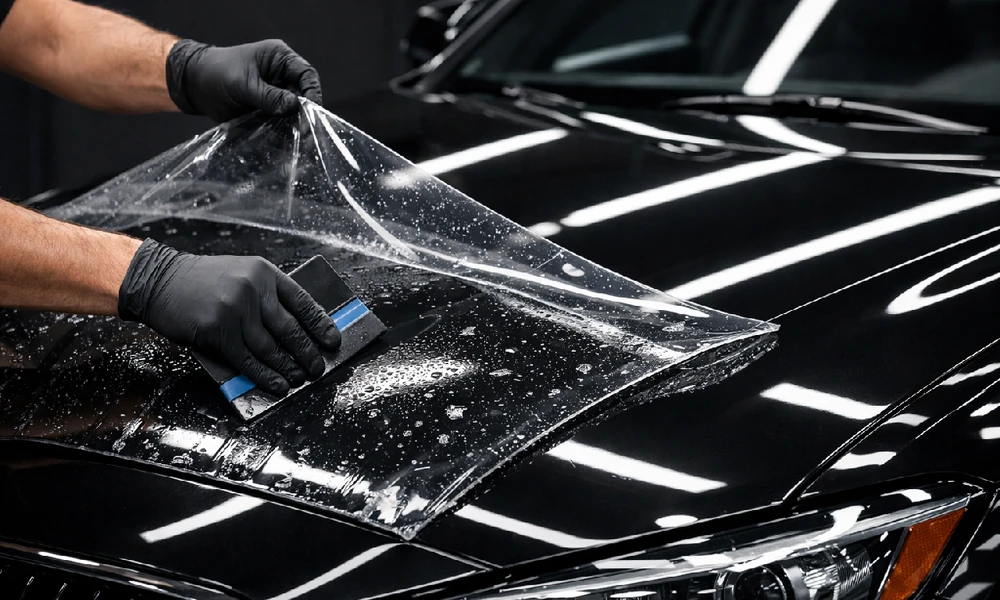
Ask most car owners what they think about washing their vehicle and you will hear a familiar mix of good intentions and quiet guilt. They know a clean car looks better and lasts longer. They also know that finding an hour on a weekend, filling buckets, scrubbing wheels and drying every panel is easy to put off.
Anything that makes that job quicker and more effective tends to get noticed. Water-repellent protection film is one of those things. It does not wash the car for you, but it changes how dirt and water behave on the surface, and that changes the washing routine in some practical ways.
Before the Wash: A Car That Stays Cleaner for Longer
The benefits begin before any bucket is filled.
On an ordinary painted surface, rain and dew spread out and evaporate slowly. As they do, they leave behind dust and minerals. Over days, that residue builds into a dull, grimy film.
A hydrophobic paint protection film causes water to bead and roll away rather than spread. When a car with this film is driven in light rain or parked outside overnight, more of the water runs off, taking loose dust with it. The result is that the car often looks cleaner between washes, which means washing can be less frequent without the car looking neglected.
The Rinse: Doing More of the Work
The first rinse is where many owners notice the difference most clearly.
On a water-repellent surface, loose dirt is held less tightly. A thorough rinse with a hose or pressure washer, kept at a safe distance from film edges, removes a larger share of grime before anything touches the paint. That matters because most washing scratches come from dragging grit across the surface. Less grit left after rinsing means less risk during the contact wash.
It also means the contact wash itself is quicker. There is simply less to remove.
The Contact Wash: Gentler and Faster
With most of the loose dirt gone, the wash mitt has an easier job. Soap glides across the surface, and stubborn spots such as insect remains and light road film tend to release with less effort.
A few habits help make the most of this.
Use a pH-neutral shampoo
Harsh or highly alkaline cleaners can wear the top coat over time. A gentle shampoo is enough on a well-maintained film.
Use two buckets
One for soapy water, one for rinsing the mitt. It keeps dirt out of the wash water and away from the film.
Work from top to bottom
The lower parts of a car carry the most grit. Washing them last avoids spreading that grit across cleaner panels.
Keep pressure light
The film does not need scrubbing. Gentle passes are more effective on a surface that releases dirt easily.
Rinsing and Drying: Fewer Spots, Less Towel Time
After washing, water on a hydrophobic surface sheets and beads off quickly. Much of it is gone before you even reach for a towel.
That has two benefits. Drying takes less time, and there is less opportunity for water to evaporate on the surface and leave mineral spots behind. In areas with hard tap water, those spots can be a constant frustration on ordinary paint.
Many owners find that a car dryer or leaf blower removes most remaining water, leaving only small areas to pat dry with a microfibre towel. Less towel contact means less chance of fine marks.
The Weekly Routine, Simplified
Because the car stays cleaner and washes more easily, the overall routine often becomes lighter. A common pattern looks like this.
A full hand wash every week or two, depending on driving and weather. A quick rinse in between if the car picks up dust or light road spray. Spot cleaning bird droppings and insects as soon as they are noticed, using a film-safe detailer and a soft cloth.
For many busy owners, that is the difference between a car that always looks slightly dirty and one that looks looked-after with modest effort.
What Still Needs Attention
Water-repellent film helps a lot, but it does not remove every chore.
Bird droppings and tree sap still need prompt removal. They can stain any surface if left in the sun, even if they lift more easily from a low-energy surface.
Road tar and heavy mud still need proper cleaning. Wheels, tyres and lower sills still collect brake dust and grime that require attention.
Automatic brush washes are still best avoided. The brushes can wear the top coat unevenly and reduce its performance over time.
And contamination can build up. If beading seems weaker, a thorough wash often brings it back, because the surface is simply coated in grime rather than worn out.
Products to Use and Products to Skip
Stick to shampoos and detailers that are labelled as safe for protection film. Avoid abrasive compounds, heavy cutting polishes and strong degreasers, which can damage the top coat.
If you want to add a spray sealant or coating, check compatibility first. Some products are designed to work with film; others may change how the surface behaves. Your installer is the best person to advise on what suits the specific film on your car.
Is It Worth Choosing for Washing Alone?
Most owners choose protection film primarily to guard against stone chips, scratches and sun damage. Easier washing is a secondary benefit. But it is a benefit you notice every single week, not just on the rare occasion a stone hits the bonnet.
For drivers who keep cars outdoors, live in wet or dusty regions or simply have limited time for car care, that weekly convenience adds up. It turns a chore that is easy to avoid into one that is quick enough to keep up with.
In the end, a car that is easier to clean is a car that gets cleaned more often. And a car that is cleaned more often, gently and properly, tends to look better for longer, which is exactly what most owners want from protection in the first place.
